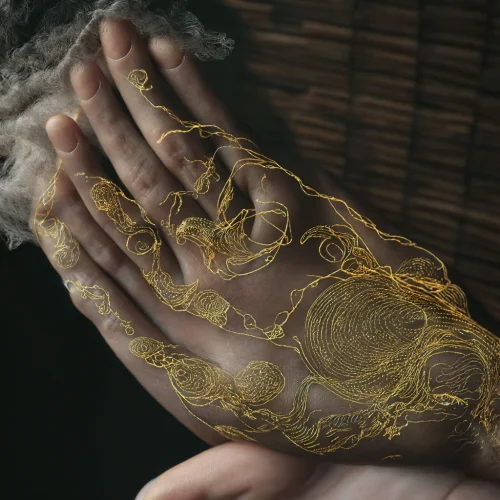
Chinese palmistry is often described as a quiet conversation between hand and heart—a tradition rooted in Daoist philosophy, Five Element theory, and centuries of observational practice. Unlike Western palm reading, which evolved from Greco-Roman and later European esoteric traditions, Chinese palmistry (also called shou xiang, or “hand observation”) approaches the palm as a microcosm of the body’s energy flow, organ health, and life rhythm—not fate in the fixed sense, but a dynamic reflection of internal balance and lived experience. This article explores key distinctions—not to declare one system “better,” but to help you recognize how each offers unique lenses for self-reflection.
Foundational Philosophy: Energy vs. Destiny
Western palmistry often treats the hand as a map of prewritten destiny—lines are read as indicators of future events, personality traits, or karmic patterns. In contrast, Chinese palmistry begins with qi (vital energy) and the interplay of Yin and Yang. The palm is viewed as a living interface where internal organ function, emotional state, and lifestyle habits leave subtle impressions over time. A deep, clear Heart Line may suggest emotional resilience—not because it guarantees happiness, but because it often correlates with balanced Heart and Small Intestine meridians in Traditional Chinese Medicine (TCM). Similarly, a faint or broken Life Line doesn’t predict shortened lifespan; rather, practitioners consider it alongside nail texture, skin tone, and finger flexibility to assess vitality and recuperative capacity.
Line Focus and Naming: Shared Symbols, Different Meanings
Both systems identify major lines—the Heart, Head, Life, and Fate lines—but their names and interpretations diverge significantly. For example:
- Life Line: In Western practice, it’s commonly linked to physical vitality and lifespan. In Chinese palmistry, it’s called the Yuan Qi Line (“Original Qi Line”) and reflects foundational energy reserves, constitutional strength, and how well one conserves or depletes vital essence through daily habits.
- Heart Line: Western readers emphasize romantic relationships and emotional expression. Chinese tradition connects it more closely to the Heart organ’s functional state—its curvature, length, and clarity may hint at patterns like restlessness (excess Fire), emotional dampness (Spleen-Qi deficiency), or calm focus (balanced Shen).
- Fate Line: Often interpreted in the West as career path or life turning points. In Chinese context, it’s known as the Heavenly Pillar Line, associated with structural support—both physical (spine, kidneys) and metaphorical (sense of purpose, stability in routines). Its presence, depth, or branching is considered alongside thumb strength and wrist flexibility.
Notably, Chinese palmistry also emphasizes features rarely highlighted in Western charts: the Mount of Earth (base of thumb) for grounding and digestive harmony; the Three Gates (creases near the wrist) as indicators of early-life environment and inherited tendencies; and the overall palm texture—moisture, warmth, and elasticity—as signs of fluid balance and circulation.
The Role of the Five Elements and Organ Correspondences
Where Western palmistry often relies on planetary associations (e.g., Mercury for communication, Venus for love), Chinese palmistry maps the hand to the Five Elements—Wood, Fire, Earth, Metal, and Water—and their corresponding organ systems. Each mount (fleshy area beneath a finger) and line segment relates to specific organs and emotions:
- Wood (Liver/Gallbladder): Linked to the index finger mount and assertiveness; tightness or redness here may reflect stress patterns affecting decision-making.
- Fire (Heart/Small Intestine): Seen in the middle of the palm and Heart Line; excessive heat may appear as reddened skin or a sharply angled line.
- Earth (Spleen/Stomach): Reflected in the center of the palm and thumb base; pallor or dryness might suggest digestive fatigue or overthinking.
- Metal (Lung/Large Intestine): Tied to the ring finger mount and outer palm edge; coolness or fine lines could relate to respiratory sensitivity or boundary-setting habits.
- Water (Kidney/Bladder): Associated with the heel of the hand and wrist area; deep creases or swelling may indicate fluid metabolism or long-term stamina.
This framework invites curiosity, not diagnosis: noticing a pattern encourages gentle inquiry—“What supports my sense of groundedness?” or “How do I replenish my energy after demanding days?”—rather than labeling outcomes.
Practical Self-Reflection Tools, Not Predictions
You don’t need formal training to begin exploring these ideas thoughtfully. Try these accessible, non-prescriptive practices:
- Observe weekly: Once a week, wash and dry your hands mindfully. Note changes in color, moisture, or tension—not to judge, but to notice rhythms. Does your palm feel warmer during busy weeks? Drier after travel?
- Compare palms: Left and right hands carry different emphasis in Chinese tradition—the left reflects innate constitution, the right reveals cultivated habits. Gently compare line clarity, mount fullness, or fingertip softness.
- Connect to breath: Place one palm face-up, relax your shoulders, and breathe slowly for 60 seconds. Observe how warmth, color, or sensation shifts. This simple act builds awareness of your body’s immediate responses.
- Journal gently: After observing, jot down one neutral observation (“My Heart Line feels smoother today”) and one open question (“What helped me feel centered this morning?”).
These practices cultivate attentiveness—not certainty. They align with broader Chinese wellness principles: small, consistent actions matter more than dramatic revelations.
Respecting Both Traditions Without Conflation
It’s tempting to blend systems—assigning a Western “marriage line” meaning to a Chinese Mount of Water, for instance—but doing so risks diluting both frameworks’ integrity. Chinese palmistry isn’t “Eastern astrology for hands”; it’s a distinct observational art shaped by clinical TCM experience, seasonal awareness, and holistic physiology. Likewise, Western palmistry has its own rich history of psychological insight and symbolic language. Appreciating differences helps us choose tools intentionally: use Chinese palmistry to reflect on energy rhythms and embodied habits; turn to Western approaches for narrative exploration of personal growth arcs—or simply enjoy both as complementary forms of mindful attention.
Ultimately, your hands hold no prophecy—only traces of how you’ve moved, rested, expressed, and responded. Whether you’re drawn to the elemental poetry of Chinese palmistry or the archetypal storytelling of Western lines, what matters most is the kindness and curiosity you bring to the looking. That, perhaps, is the most universal line of all.