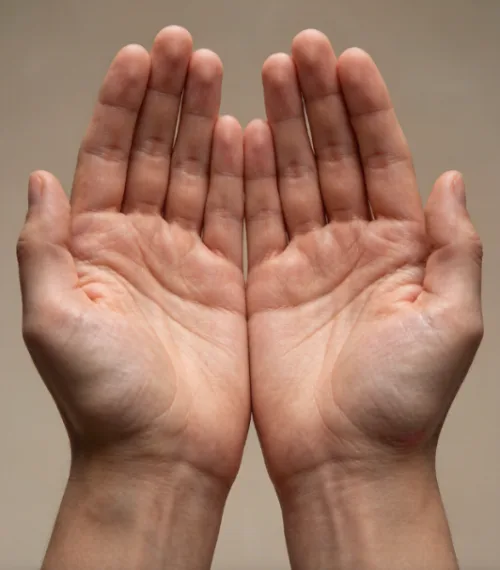
When exploring palmistry through a Chinese cultural lens, many newcomers wonder: “Do both hands really matter—or is one enough?” Unlike Western palmistry traditions that often emphasize the dominant hand, Chinese palm reading (also called shouxiang, or “hand appearance”) takes a more integrated, observational approach. There’s no single “correct” hand to read first—but there is value in comparing both. This article clarifies how and why practitioners consider both palms, what each reveals—not as fate, but as symbolic reflection—and how you can begin observing your own hands with curiosity and care.
The Two-Hand Principle: Complement, Not Contradiction
In traditional Chinese hand analysis, neither hand is labeled “destiny” or “free will” in absolute terms. Instead, the left and right hands are seen as complementary expressions of the same person—like two sides of a conversation. The dominant hand (usually the one you write with) tends to reflect how you actively shape your life: choices made, habits formed, and energy directed outward. The non-dominant hand often shows patterns established earlier in life—family influences, innate temperament, or tendencies you may not yet fully express. Neither overrides the other; together, they offer context. Think of them like a journal entry (dominant hand) alongside its rough draft (non-dominant hand). The insight lies not in picking one as “true,” but in noticing where they align—or diverge.
What to Observe: Lines, Mounts, and Texture—Not Just One Hand
Rather than searching for definitive predictions, Chinese palmistry invites attention to consistent features across both hands. Key elements include:
- Major lines (Heart, Head, Life, and Fate lines): Compare depth, continuity, and branching. A faint Heart line on the left but bold and clear on the right might suggest growing emotional awareness over time—not a fixed trait, but an evolving capacity.
- Mounts (fleshy pads beneath each finger): Observe relative fullness and texture. A pronounced Mount of Jupiter (below the index finger) on both hands may point to strong personal values or leadership inclination; if it’s fuller on the dominant hand, it could indicate those qualities are increasingly expressed in daily action.
- Skin texture and flexibility: Smooth, supple skin may correlate with adaptability; thicker or drier texture might reflect resilience built through experience. These qualities often appear similarly in both hands—but subtle differences can highlight areas of growth or adjustment.
Importantly, no single feature carries universal meaning. Interpretation always considers the whole hand—and the person holding it.
Why Comparing Hands Supports Self-Reflection
Looking at both hands encourages humility and openness—not certainty. When lines differ between palms, it rarely signals contradiction; more often, it reflects natural human development. For example, someone who grew up in a reserved household (visible in a restrained Head line on the non-dominant hand) but later pursued creative work (a newly branched, active Head line on the dominant hand) illustrates how environment and intention interact over time. This isn’t about “changing your fate,” but recognizing how your responses to life shape your presence in it. Comparison helps spot patterns worth noticing—not fixing. It turns palm reading from fortune-telling into a quiet mirror for self-inquiry.
Practical Steps to Begin Your Own Observation
You don’t need special tools—just good light and a few minutes of gentle attention. Try this grounded, beginner-friendly approach:
- Wash and dry your hands. Clean skin makes lines and textures easier to see.
- Hold each hand separately under soft light. Note first impressions: Which feels more relaxed? Which has clearer lines?
- Compare one feature at a time—e.g., trace your Life line on both hands. Is it longer on one side? Does it fork differently? Avoid labeling “better” or “worse”; instead, ask: “What might this say about consistency—or change—in my physical energy or daily rhythm?”
- Journal briefly. Jot down observations without interpretation: “Right Heart line ends near thumb; left one curves upward.” Return in a few weeks and note if anything feels different—not in your palm, but in how you relate to that observation.
This practice builds familiarity—not authority. Over time, you may notice how your hands shift subtly with rest, stress, or new routines. That’s not mystical—it’s physiology meeting awareness.
A Note on Cultural Context and Modern Practice
Classical Chinese texts mention hand features sparingly—often within broader frameworks like Wu Xing (Five Phases) or Yin-Yang balance—but never as standalone destiny maps. Modern palm reading in Chinese-speaking communities often blends historical symbolism with psychological insight and somatic awareness. Today’s thoughtful practitioners avoid declarations like “You will marry at 28” or “Your career is blocked.” Instead, they ask: “What strengths do your hands reveal you’ve already cultivated? Where might gentler attention support your well-being?” That shift—from prediction to partnership—is what makes contemporary Chinese-influenced palmistry both respectful and relevant.
So do both hands matter? Yes—not because they hold answers, but because they hold questions worth asking gently: How have I grown? What patterns feel familiar—and which ones am I beginning to reshape? Your palms won’t tell you what to do next. But with patience and kindness, they may help you notice what you’re already doing—and how you’d like to continue showing up for yourself.