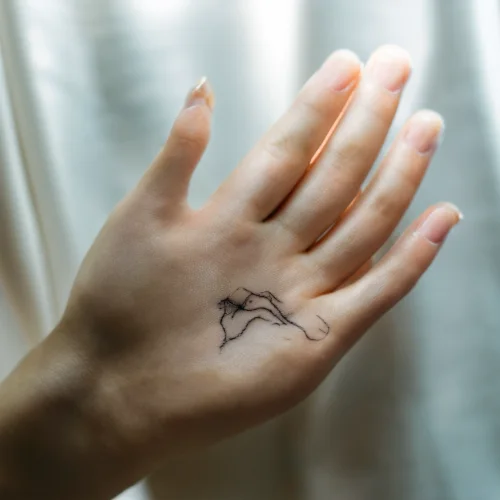
Have you ever glanced at your palm and wondered what those lines might mean? Maybe a friend pointed out your “long life line” or someone joked that your “broken heart line” explains your dating history. Palmistry—especially as practiced in Chinese tradition—has fascinated people for centuries. But before you assume your destiny is etched in skin, it’s important to understand what palm reading actually offers: not predictions carved in stone, but symbolic reflections rooted in observation, cultural context, and self-inquiry. In this article, we’ll explore how Chinese palmistry interprets major lines—not as fixed forecasts, but as invitations to notice patterns in your thoughts, emotions, and choices.
What Chinese Palmistry Is (and Isn’t)
Chinese palmistry, or shou xiang (hand physiognomy), is part of a broader tradition of holistic observation used in classical Chinese medicine and philosophy. Unlike fortune-telling systems that claim to reveal unchangeable outcomes, traditional Chinese hand analysis focuses on tendencies, energies, and relational balance—much like interpreting the tongue or pulse in TCM. Lines, mounts, texture, color, and flexibility are all considered together, never in isolation. There’s no “master chart” that applies universally; interpretation depends on the whole hand, the person’s age, health, and lived experience. Importantly, ancient texts like the Yi Jing and medical classics emphasize change and responsiveness—suggesting that awareness itself can shift how energy flows, including through the hands.
Three Major Lines: Symbolism Over Certainty
While Western palmistry often highlights the heart, head, and life lines separately, Chinese practice views them as interconnected expressions of Shen (spirit/mind), Qi (vital energy), and Jing (essence/life force). Here’s how they’re commonly understood—not as fate, but as dynamic indicators:
- The Heart Line (Emotional Clarity Line): Starting near the edge of the palm under the little finger, its length, depth, and continuity reflect emotional habits—not romantic destiny. A gently curved, unbroken line may suggest emotional resilience; a chain-like or forked pattern might point to periods of introspection or shifting priorities. Note: These patterns can evolve with life experience, therapy, or mindful practice.
- The Head Line (Mental Orientation Line): Running horizontally across the palm, this line relates less to intelligence and more to how one processes information and makes decisions. A long, clear line may indicate thoughtful analysis; a shorter or wavy line could reflect intuitive or adaptive thinking. In Chinese tradition, the head line’s relationship to the life line reveals how mental habits support—or sometimes strain—physical vitality.
- The Life Line (Vitality & Engagement Line): Contrary to popular myth, this line does not predict lifespan. Instead, it reflects physical constitution, stamina, and engagement with life—how energetically one meets daily demands. A deep, rounded arc may signal strong reserves and grounded presence; a faint or segmented line doesn’t imply poor health, but perhaps periods of low energy, transition, or external stressors worth exploring with compassion.
Why “Set in Stone” Doesn’t Fit the Tradition
Classical Chinese thought rejects rigid determinism. The Dao De Jing reminds us, “A journey of a thousand miles begins beneath the feet”—emphasizing agency and unfolding process. Similarly, palm lines change over time: studies in dermatoglyphics confirm that ridge patterns remain stable after age 10, but line clarity, depth, and even branching can shift with lifestyle, injury, chronic conditions, or sustained emotional shifts. A palmist trained in Chinese principles won’t say, “You’ll divorce at 38,” but might observe, “Your heart line shows increasing clarity over the past decade—have you noticed changes in how you communicate needs?” That question invites reflection, not resignation. What appears as “fate” is often habit, environment, or unexamined response—and habits, by definition, can be reshaped.
Practical Ways to Engage With Your Palm—Thoughtfully
Instead of seeking answers, try using your palm as a gentle mirror. Here are three grounded, non-dogmatic practices:
- Observe without judgment: Once a month, look at both palms in natural light. Notice differences between left (often associated with innate traits) and right (often linked to cultivated habits). Are lines clearer on one side? Does texture vary? Jot down what you see—no interpretation needed yet.
- Connect line qualities to recent experience: If your head line appears more fragmented than last year, ask: Have I been juggling many responsibilities? Am I feeling mentally scattered—or creatively associative? Context matters more than the line alone.
- Pair palm awareness with other self-checks: Try matching your observations with sleep quality, energy levels, or emotional tone over the same period. This builds embodied literacy—not prediction, but pattern recognition rooted in your own life.
Remember: no line condemns, guarantees, or defines you. What makes palmistry meaningful isn’t certainty—it’s the pause it creates. That moment when you hold your hand and truly look is already an act of presence. And in Chinese tradition, presence—aware, kind, responsive—is where real influence begins.