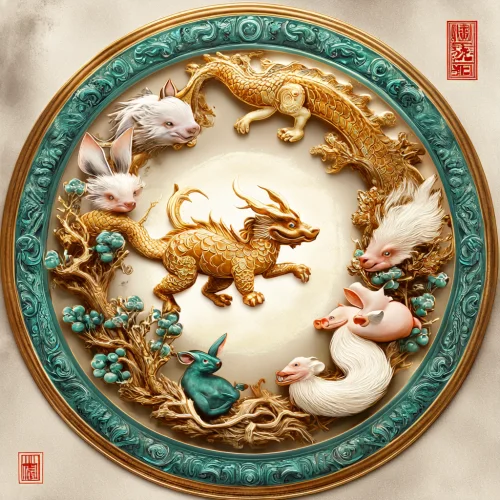
At first glance, the Chinese zodiac—12 animals cycling through 60-year patterns—might seem like a charming cultural footnote. But for millions of people across Asia and the global diaspora, these animals carry quiet weight: they appear in birthday wishes, shape naming decisions, inform wedding dates, and even spark lighthearted debates about workplace dynamics. So why do the animals matter so much—not just as symbols, but as living reference points in daily life? The answer lies less in mysticism and more in history, language, and the human need for meaningful patterns.
A Calendar Rooted in Observation, Not Myth
The Chinese zodiac didn’t begin as fortune-telling—it emerged from practical timekeeping. Over 2,000 years ago, astronomers tracked Jupiter’s 12-year orbit around the Sun and divided the sky into 12 “branches” to mark lunar cycles. Animals were later assigned to each branch as memorable, culturally resonant anchors—think of them as vivid mnemonics for farmers, scholars, and officials alike. The Rat, Ox, Tiger, and others weren’t chosen for magical qualities, but for traits deeply familiar in agrarian society: the Ox’s steadiness, the Rooster’s punctuality at dawn, the Snake’s quiet presence in grain stores. This grounding in real-world observation helped the system endure—not because it predicted fate, but because it reflected shared experience.
Language, Idioms, and Everyday Meaning-Making
In Mandarin and other Sinitic languages, animal references are woven into idioms, proverbs, and casual speech—often carrying layered social nuance. Saying someone is “as steady as an Ox” or “as alert as a Monkey” isn’t vague flattery; it’s invoking a widely understood shorthand. These expressions reinforce collective values: diligence (Ox), adaptability (Monkey), loyalty (Dog), resilience (Pig). Even today, children learn zodiac stories in school not as superstition, but as part of literary and ethical education. The animals become cultural touchstones—like Aesop’s fables in Western tradition—offering gentle, relatable frames for discussing behavior, growth, and responsibility.
How People Actually Use the Zodiac Today
Modern usage varies widely—and that’s key. For many, especially younger urban Chinese, the zodiac is a playful identity marker: sharing your sign on social media, choosing a pet named after your birth animal, or joking about “Rat energy” during busy project deadlines. Others consult it more intentionally—for example, reviewing compatibility charts before moving in with a partner, or selecting auspicious dates for signing contracts (though this often involves broader calendrical systems like the gan-zhi, not the zodiac alone). Importantly, most educated users distinguish between symbolic resonance and deterministic belief. A 2023 survey by the China Social Survey Center found that over 70% of respondents aged 18–35 said they “enjoy the stories and metaphors” of the zodiac—but fewer than 20% said they’d change major life plans based solely on their animal sign.
What You Can Gently Explore—Without Pressure
If you’re new to the zodiac, here are thoughtful, low-stakes ways to engage:
- Learn your sign—and its paired element. Each animal appears once every 12 years, but also rotates through five elements (Wood, Fire, Earth, Metal, Water) over a 60-year cycle. Your full sign includes both (e.g., 1984 is a Wood Rat; 2020 is a Metal Rat). Elements add subtle texture—Wood Rats may emphasize growth and flexibility, while Metal Rats lean toward clarity and structure.
- Notice how animals show up in art and design. From Lunar New Year posters to street murals in Singapore or San Francisco’s Chinatown, zodiac motifs reflect local creativity—not rigid rules. Pay attention to how artists reinterpret the Tiger (power), Rabbit (gentleness), or Dragon (ambition) across generations.
- Ask open questions when talking with friends. Instead of “What does your sign say about you?”, try: “Did your family ever mention your zodiac animal growing up?” or “Is there one animal story you remember from childhood?” These invite personal reflection without assumptions.
- Compare—not contrast—with other systems. Like Western astrology or Vedic traditions, the Chinese zodiac offers a lens, not a law. Its strength lies in cultural continuity and narrative richness—not predictive precision.
Ultimately, the animals matter because people have kept them meaningful—across centuries and continents—not through dogma, but through storytelling, adaptation, and quiet recognition. They remind us that culture isn’t static; it breathes through language, humor, memory, and choice. Whether you’re born in the Year of the Horse or the Year of the Goat, the real invitation isn’t to believe, but to notice: how do these ancient symbols still echo in modern conversations, celebrations, and self-understanding? That curiosity—grounded, respectful, and open-ended—is where meaningful learning begins.