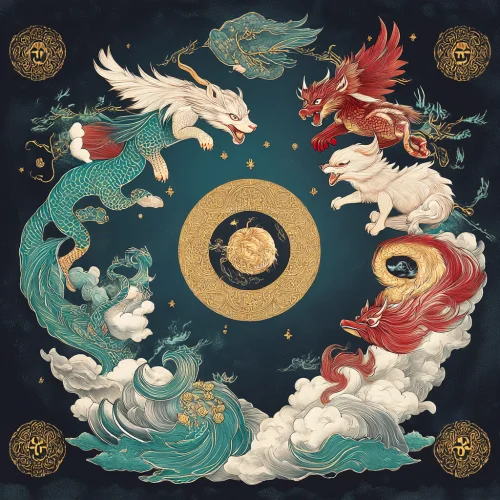
Many people outside China first encounter the Chinese zodiac through playful social media posts—“What’s your animal sign?” or “2025 is your year of renewal!” But when you dig deeper, you’ll notice something distinct: in many Chinese-speaking communities, the zodiac isn’t just a lighthearted label. It’s woven into family conversations, wedding planning, naming traditions, and even business timing. So what’s really going on? Is the Chinese zodiac taken seriously—or is it mostly cultural flavor? Let’s explore how this 2,000-year-old system lives today, without overstating its role or dismissing its resonance.
A Living Tradition, Not Just a Calendar
The Chinese zodiac isn’t a standalone fortune-telling tool—it’s part of a broader cosmological framework rooted in lunar cycles, the Five Elements (Wood, Fire, Earth, Metal, Water), and the Yin-Yang balance. Unlike Western sun-sign astrology, which focuses mainly on birth month, the Chinese zodiac assigns an animal—and an element—to each year in a repeating 60-year cycle. This structure reflects a worldview where time itself is cyclical and relational. In daily life, that means the zodiac often appears alongside other traditional markers: auspicious dates for moving house, selecting wedding days based on compatibility charts, or choosing baby names aligned with elemental balance. These practices aren’t about rigid fate—they’re expressions of intentionality and respect for rhythm and harmony.
How People Actually Use It Today
In modern China, Taiwan, Singapore, Malaysia, and diaspora communities, the zodiac functions on multiple levels—some practical, some symbolic, some quietly personal. Most people don’t consult it before accepting a job offer—but they might pause to consider how their Rabbit-year temperament aligns with a collaborative team culture. Parents may reflect on their child’s Dragon or Goat traits when supporting emotional development—not as diagnosis, but as one lens among many. And during Lunar New Year, sharing zodiac insights becomes a warm, low-stakes way to connect across generations. Importantly, surveys show younger adults increasingly approach the zodiac with curiosity rather than obligation—using apps to explore elemental pairings or watching livestreams that blend ancient concepts with relatable life questions (“How do I navigate conflict as a sensitive Pig?”).
Compatibility: More Than Matchmaking
Zodiac compatibility is often misunderstood as a simple “yes/no” for relationships. In practice, it’s more like a conversation starter. Traditional pairings (e.g., Rat and Dragon, Ox and Snake) highlight complementary strengths—such as shared values around diligence or mutual appreciation for quiet loyalty. But real-life harmony depends on communication, shared goals, and lived experience—not animal signs alone. Many couples use compatibility notes playfully: “We’re both Tigers—let’s remember to take turns leading!” Others find value in learning how their signs handle stress (e.g., Roosters may vocalize concerns quickly; Pigs tend to process internally), helping them adjust expectations and deepen empathy. Think of it less like destiny and more like cultural shorthand—a shared vocabulary for talking about differences.
Yearly Cycles: Timing, Not Prediction
Each new zodiac year sparks renewed interest—not because people believe everything will change overnight, but because annual themes offer reflective anchors. For example, the 2024 Year of the Wood Dragon invites attention to growth, authenticity, and bold yet grounded action. Some entrepreneurs launch initiatives then, not because the Dragon guarantees success, but because its symbolism resonates with their current energy and goals. Similarly, those born in previous Dragon years (1928, 1940, 1952, etc.) may choose to revisit personal aspirations during this time—not as obligation, but as meaningful ritual. The key is agency: the zodiac doesn’t assign outcomes; it offers metaphors that help people name intentions, recognize patterns, and honor seasonal shifts in their own lives.
Practical Ways to Engage Thoughtfully
If you’re exploring the Chinese zodiac beyond surface-level fun, here are grounded ways to begin:
- Learn your full zodiac profile: Your animal sign is only part of the picture—note your birth year’s element (e.g., 1992 is Water Monkey) and whether your birth hour falls in a “hidden stem” period—many free online tools explain this step-by-step.
- Observe, don’t prescribe: Notice how zodiac references appear in films, festivals, or family stories. Ask open questions: “Why do you think this pairing is considered harmonious?” rather than assuming universal rules.
- Compare, don’t replace: Use zodiac insights alongside other self-reflection tools—journaling, feedback from trusted friends, or professional guidance—never as substitutes for thoughtful decision-making.
- Respect context: A joke about “lazy Pigs” in English may carry different weight in Mandarin, where the Pig symbolizes generosity and calm. When sharing zodiac ideas across cultures, prioritize nuance over cliché.
So—is the Chinese zodiac “just for fun,” or “taken seriously”? The answer lies somewhere in between. It’s neither a cosmic command nor mere entertainment. For millions, it’s a flexible, evolving part of cultural identity—one that encourages reflection, fosters connection, and honors time as something alive and meaningful. Whether you’re reading your sign out of curiosity or using it to spark a conversation with a grandparent, what matters most isn’t belief, but presence: how attentively and kindly you engage with yourself and others, year after year.