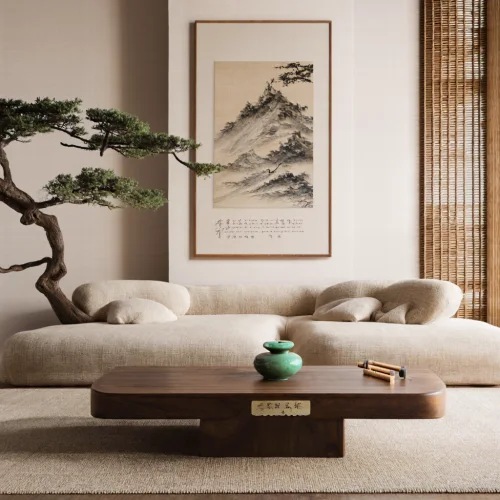
Feng Shui—pronounced “fung shway”—is often described as the ancient Chinese art of harmonizing energy in space. But that definition barely scratches the surface. Unlike trends that come and go, Feng Shui has evolved over 3,000 years—not as a rigid set of rules, but as a thoughtful, adaptable practice rooted in observation, balance, and respect for natural rhythms. Today, people worldwide turn to it not for magic or quick fixes, but as a gentle framework for making intentional choices about where and how they live. Whether you’re reorganizing a home office, choosing a new apartment, or simply wondering why your bedroom feels restless, understanding Feng Shui can offer grounded, practical insights—no incense or crystals required.
It’s Not Magic—It’s Methodical Observation
Feng Shui began long before interior design existed as a profession. Its earliest roots lie in Chinese geomancy—the careful study of landforms, water flow, sunlight patterns, and seasonal shifts. Ancient farmers, builders, and astronomers noticed how certain site orientations supported health, crop yield, and community resilience. Over centuries, these observations coalesced into principles like Qi (life force energy), Yin and Yang (complementary forces), and the Five Elements (Wood, Fire, Earth, Metal, Water). Importantly, Qi isn’t mystical—it refers to measurable, everyday phenomena: airflow, light quality, acoustics, temperature gradients, even psychological comfort. When practitioners talk about “enhancing Qi,” they mean optimizing conditions that support calm focus, restful sleep, or easy movement—things modern environmental psychology also validates.
What You Can Actually Do—No Renovations Needed
You don’t need to hire a consultant or overhaul your space to begin. Small, consistent adjustments often have the most sustainable impact. Start with what’s visible and tangible:
- Clear visual clutter: Remove broken items, unused electronics, or stacked paperwork—especially near entrances and desks. Clutter doesn’t “block Qi” in a supernatural sense; it fragments attention and signals unresolved tasks.
- Improve air and light flow: Open windows regularly—even for five minutes—to refresh indoor air. Swap heavy curtains for lighter fabrics where possible, and position seating so you can see the door without straining (a principle called the “command position”).
- Anchor key areas with intention: In the bedroom, place your bed against a solid wall (not directly under a window or beam) and keep nightstands balanced on both sides. In the kitchen, keep the stove clean and uncluttered—symbolically and practically supporting nourishment and daily rhythm.
- Use plants mindfully: A healthy, well-watered plant adds vibrancy and softens sharp corners—but avoid spiky or overly dense varieties in bedrooms or narrow hallways, where they may create visual tension.
These aren’t prescriptions—they’re invitations to notice how your environment supports (or disrupts) your daily habits and mood.
Directions Matter—But Not the Way You Might Think
Many online guides assign fixed meanings to compass directions (“North = Career,” “South = Fame”)—but traditional Feng Shui rarely treats direction as universal truth. Instead, orientation is one piece of context among many: building layout, street alignment, nearby trees or structures, and even your personal birth data (in advanced schools like Flying Stars or Eight Mansions). For most people, practical orientation matters more than symbolic labels. For example, facing east while working may align with morning light and circadian cues—supporting alertness. Facing west in the evening may feel soothing as daylight softens. Rather than chasing “lucky directions,” try observing where natural light falls at different times, where breezes enter, or where noise or distraction tends to gather. That real-world awareness is more valuable—and more accurate—than any generic chart.
Timing Is Part of the Practice—Not Just “Good Days”
Feng Shui includes timing—not as fortune-telling, but as seasonal and cyclical awareness. The Chinese solar calendar divides the year into 24 “Jie Qi” (energy nodes), marking subtle shifts in temperature, light, and activity. Spring invites clearing and planting intentions; late summer encourages reflection and consolidation; winter supports rest and inward focus. You don’t need to track lunar phases to benefit—just notice how your energy changes across seasons, and adjust accordingly: swap heavier textiles for lighter ones in warmer months, introduce warm lighting during shorter days, or pause before major purchases during transitional periods (like the “Void Period” between lunar months). These aren’t superstitions—they’re reminders that human rhythm is deeply tied to planetary and ecological cycles.
Why It Resonates Now—And How to Keep It Real
Feng Shui’s global appeal isn’t about exoticism—it reflects a growing desire for agency in chaotic times. When algorithms curate our feeds, notifications fragment our attention, and housing markets limit choice, small, conscious acts—like arranging a shelf or opening a window—reclaim a sense of participation in our surroundings. Yet its value fades when reduced to formulas (“place a crystal here for wealth”) or divorced from ethics. Authentic Feng Shui asks: Does this arrangement serve well-being? Is it respectful of others’ needs? Does it honor the materials and space we already have? It thrives not in perfection, but in responsiveness—in noticing, adjusting, and returning to balance again and again.
So if you hear someone rearranging furniture or choosing a new front door color “for Feng Shui,” they’re likely engaging with an old tradition in a very modern way: asking how their environment can better support who they are—and who they hope to become. No belief system required. Just curiosity, care, and a willingness to start where you are.