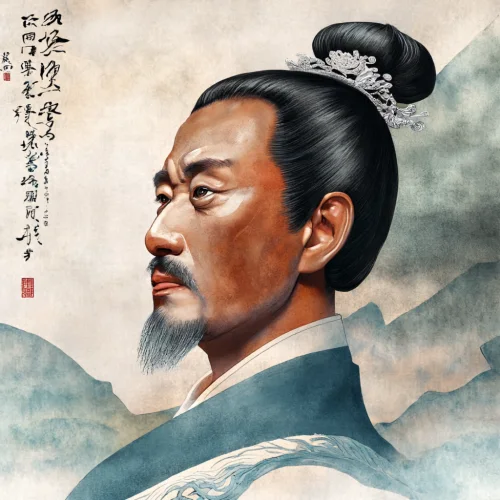
Face Reading in Chinese tradition is often described as a quiet conversation between the face and the observer—a symbolic language rooted in centuries of observation, philosophy, and cultural values. But when Western readers hear “reading faces,” they may think first of 19th-century European physiognomy—where broad nose shapes supposedly signaled aggression or high foreheads hinted at intelligence. So how do these traditions relate? Are they cousins, distant relatives, or entirely different branches of human curiosity? Let’s explore with care, clarity, and respect for both contexts.
Origins: Different Philosophies, Different Questions
Chinese Face Reading (also called mian xiang) emerged from Daoist, Confucian, and medical frameworks over two thousand years. It treats the face as a dynamic map—not of fixed destiny, but of energetic patterns, life-stage shifts, and relational harmony. A fuller cheekbone might suggest strong Kidney Qi during youth; a faint bluish tint beneath the eyes could reflect temporary fatigue or emotional sensitivity—not diagnosis, but a gentle cue to pause and reflect. In contrast, Western physiognomy—especially as formalized by Johann Kaspar Lavater in the 1700s—often sought universal, static correlations between bone structure and moral character. Lavater’s system classified people into types like “the noble” or “the deceitful” based on profile angles and brow shapes. While both traditions observe facial features, their underlying questions differ: Chinese practice asks, “What does this reveal about balance and change?” while classical Western physiognomy asked, “What does this reveal about inherent nature?”
Symbolism vs. Typology: How Meaning Is Built
In Chinese Face Reading, symbolism is layered and contextual. The face is divided into “Three Courts” (upper, middle, lower), each linked to life phases and organ systems—not as anatomy, but as functional metaphors. For example, the forehead (Upper Court) relates to early life and ancestral influence; the nose bridge (Middle Court) reflects midlife resources and relationships; the jawline and mouth area (Lower Court) connects to later years and legacy. These associations are taught through generations of practitioners and refined through observation—not statistical validation, but cultural continuity. Western physiognomy, by comparison, leaned heavily on typology: assigning fixed personality traits to measurable physical traits. A “prominent chin” meant willpower in Lavater’s view; a “receding chin” implied weakness. Chinese practice avoids such absolutes. Instead, it interprets features relationally—for instance, a broad nose *with* clear nasal veins and moist skin may suggest grounded vitality, while the same shape *with* dryness and pallor may point to seasonal imbalance—not permanent traits, but shifting conditions.
What Features Are Emphasized—and Why
Both traditions notice eyebrows, eyes, nose, mouth, and jaw—but what they prioritize and how they interpret varies meaningfully:
- Eyes: In Chinese tradition, the “spirit windows” reflect Shen (vital presence). Bright, calm eyes with steady gaze suggest balanced Heart Qi; flickering or dull eyes may indicate temporary stress or distraction—not mental illness, but a signal to rest or reconnect.
- Brows: Shape, thickness, and connection to the nose bridge are noted. Unibrows or thick, connected brows are sometimes associated with strong will or protective energy—not “good” or “bad,” but one expression of constitutional emphasis.
- Nose: Seen as the “earth center” of the face, linked symbolically to stability, resources, and self-worth. A well-proportioned, moist nose with visible pores may align with robust Spleen Qi; flaring nostrils during conversation might simply reflect engaged breathing—not anxiety, but present-moment energy flow.
- Mouth & Lips: Full lips may suggest generosity or receptivity; thin lips may indicate precision or reserve. Neither is ranked—both are understood as part of a person’s expressive range.
- Skin Tone & Texture: Subtle shifts—like warmth in the cheeks or slight puffiness near the temples—are read alongside lifestyle, season, and recent experiences. They’re treated as transient markers, not lifelong labels.
Modern Practice: Respectful Observation, Not Judgment
Today, ethical Face Reading in Chinese tradition emphasizes humility and context. Practitioners are trained to avoid labeling, predicting, or pathologizing. A student learning mian xiang might be reminded: “The face shows what is active now—not what is unchangeable.” This aligns with broader East Asian wellness principles that value adaptability, seasonal awareness, and relational health over rigid categories. Meanwhile, modern Western psychology has largely moved away from physiognomy due to its misuse in eugenics, colonial classification, and discrimination. Contemporary interest in “face reading” in the West tends toward micro-expression research (like Paul Ekman’s work on universal emotions) or aesthetic analysis—not moral assessment. That historical caution reminds us why cultural grounding matters: when symbols are detached from their original philosophical roots, meaning can distort.
Practical Takeaways for Curious Observers
If you’re exploring Face Reading with openness and respect, here are thoughtful ways to begin:
- Observe yourself first. Spend five minutes weekly looking in the mirror—not to critique, but to notice: How does your complexion shift with sleep? Do your eyes look brighter after time outdoors? This builds gentle self-awareness, not diagnosis.
- Learn the Three Courts as a framework—not a formula. Use them to reflect on life stages (“What supports me now? What am I releasing?”), not to assign fixed roles.
- Pair observation with action. If you notice frequent tension around the eyes, consider screen breaks or herbal tea—not because your face “says you’re stressed,” but because your body may be inviting care.
- Ask cultural questions. When reading about any tradition, ask: Who developed this? For what purpose? How has it evolved? This deepens understanding far more than seeking “accuracy.”
- Respect boundaries. Never read someone’s face without permission—or use observations to make assumptions about their choices, health, or worth.
Face Reading and Western physiognomy share a human impulse—to understand ourselves and others through visible cues. But their methods, intentions, and ethical guardrails differ significantly. Chinese Face Reading invites reflection, not reduction; symbolism, not certainty. Approached with curiosity and humility, it remains a meaningful part of holistic self-study—not as fortune-telling, but as one quiet way to listen more deeply to the stories our bodies tell, in their own subtle, changing language.